a multicultural Research Library
Making multicultural Australia
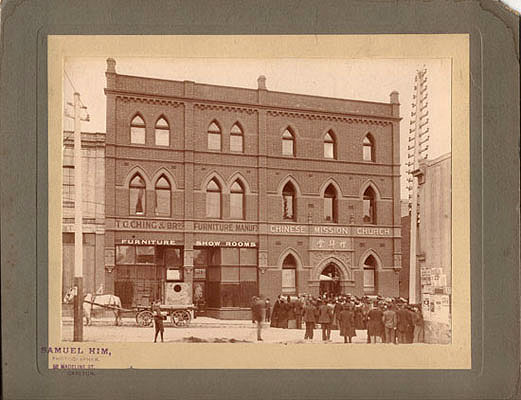
Frontages of successful merchant houses next to Christian churches (Slide 5)
Andrew Jakubowicz.
By the 1890s, the red-brick frontages of successful merchant houses sat side by side with Christian churches, society clubhouses and other 'respectable' premises that gave Little Bourke Street its distinctive late-Victorian solidity and human scale.
Created:
unknown
Date Added:
03 February 2009
Source:
source not available
Format:
jpg (JPEG Image);
File size:
48 KB
Dimensions:
521 x 400
Transcript
By the 1890s, the red-brick frontages of successful merchant houses sat side by side with Christian churches, society clubhouses and other ‘respectable’ premises that gave Little Bourke Street its distinctive late-Victorian solidity and human scale. The fabric of Melbourne’s ‘Chinese Quarter’ was added to and improved from its beginnings in the 1850s to its peak and then decline by the 1920s.
Museum of Chinese Australian History
Item: 2006.01.03; c. 1920s
Photographer Samuel Him, 55 Madeline St, Carlton
View other images on Cultural Studies
 Sri Lankan dance - 3
- The ‘Chinese Quarter’ centred on Little Bourke, Lonsdale and Little Lonsdale Streets and their alley
- Serap Ozdemir
- Asylum seekers support rally
- Wang with her parents and siblings
- The Martin Luther King Kirche (German Lutheran)
View other Artworks
- Brunswick Baths Mural (slide 08)
- "Epiphany at the Bogie Hole"
- Drawing by child in detention - 1
- Brunswick Baths Mural (slide 07)
- "Frustration of No Beginning and No End"
- The Petrie Tableau - Plaque
Visit the multicultural Library for other documents, video, audio and images.